
Dissemination
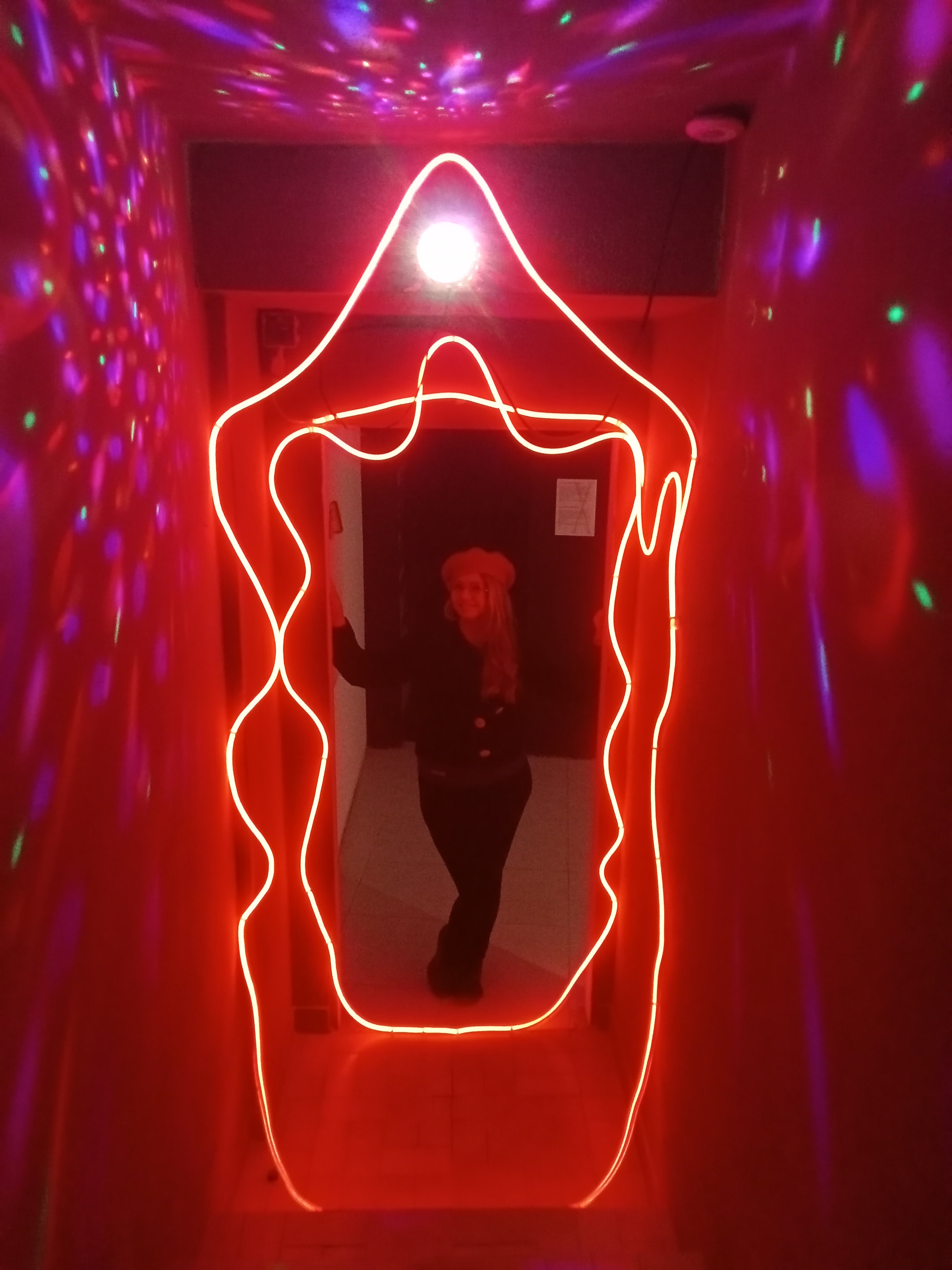
CIAC researcher Juli Wexel creates interactive artwork for Sex Museum Portugal
By invitation of Sex Museum Portugal, multimedia artist, PhD in Digital Media-Art (UAlg-UAb-DMAD), and CIAC researcher Juli Wexel created That’s VULVA: ivagination II (2026), an exclusive and permanent site-specific installation for the museum space. The work is an interactive adaptation of her original ephemeral computational “de-installation” ivagination (Lisbon, 2020).
In both creations, the clitoris is activated by the flow of visitors as a gesture of tribute to the sexual organ’s unique function of generating pleasure. That’s VULVA: ivagination II is the fourth feminist media-art artefact in the career of the Italian-Brazilian artist, whose work combines speculative practice-based artistic research with the development of her doctoral theory on the global vulva art movement.
Within the current fourth feminist wave (2012–), artists associated with vulva art focus on female genitalia as objects of visual, imagetic, performative, and narrative representation in aesthetic discourses that deconstruct patriarchal notions and taboo themes surrounding binary and non-binary subjectivities, vulvar anatomy, pleasure, eroticism, orgasm, masturbation, menstruation, and reproduction through intersectional vulvar and clitoral iconographies encompassing cisgender, transgender, and intersex bodies.
In her doctoral thesis VULVA É MÍDIA: Vulva Art, Vulvartivism and Digital Media Art (2025), Juli Wexel introduces the original concepts of vulvartivism — vulva artivism, a segment of insurgent and engaged art celebrating themes such as vulvar diversity — and clitartivism, a category of vulvartivism centred on the clitoris as an object of representation within clitoris art or clit art. The thesis was supervised by Bruno Mendes da Silva and co-supervised by Mirian Tavares.
That’s VULVA: ivagination II (2026) is a collaborative project between the Sex Museum and the artist and aligns with Goal 5 of the United Nations 2030 Agenda regarding Gender Equality, particularly in relation to access to technology and basic information, as well as the fight against sexual violence such as Female Genital Mutilation (FGM).
The work is also a donation from the artist to Sex Museum Portugal as an expression of gratitude to the Portuguese Republic for the financial support granted through the Research Fellowship UI/BD/150845/2021 of Project UIDP/04019/2020, under the Collaboration Protocol for Funding the Multiannual Research Fellowship Plan for Doctoral Students, established between the Fundação para a Ciência e a Tecnologia (FCT) and the R&D Unit CIAC at the Universidade do Algarve, within the scope of the Digital Media-Art PhD programme (DMAD) and in cooperation with the Universidade Aberta.
Sex Museum Portugal is open daily from 10am to 7pm. Further information is available on the museum’s website: sexmuseumportugal.com.
Esta publicação também está disponível em: Portuguese (Portugal)