
Dissemination
Hugo Paquete publishes archive of works dedicated to interactive performance and experimental sound online
Hugo Paquete, CIAC researcher and sound artist, announces the public release of a set of archival works from his artistic practice, now accessible online for the first time. After a year focused mainly on new projects, the artist revisits and shares compositions and systems that explore the intersection between interactive performance, experimental sound, and computational media.
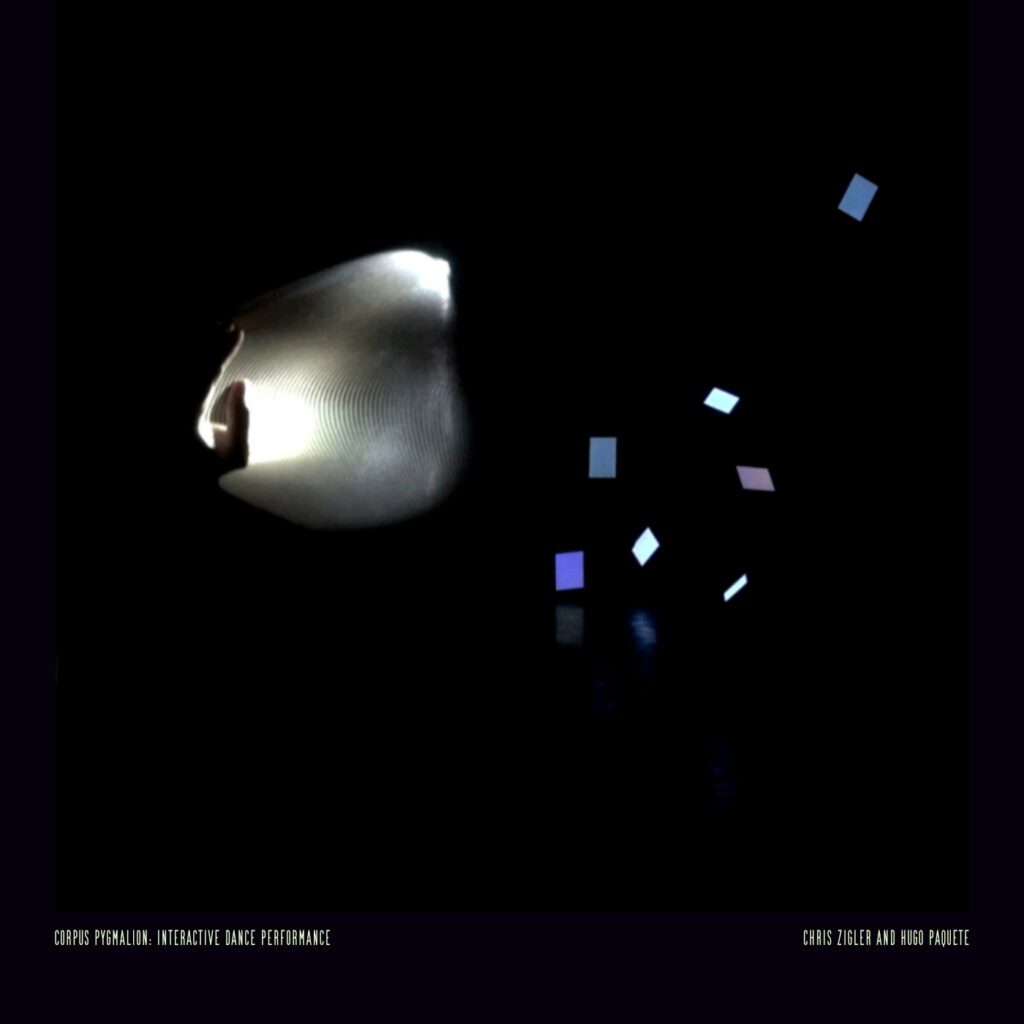
Among the highlights is “C/Py+on”, a score created for Corpus Pygmalion, a media performance by Chris Ziegler premiered at ZKM | Karlsruhe in 2011. The album presents a cybernetic feedback system in which the dancer’s body triggers and shapes the sound in real time — a process the artist describes as an “algorithm of flesh.” The work addresses themes such as creation, agency, and embodiment through generative composition, stochastic processes, and custom interactive systems.
The release brings together:
- generative soundscapes and rhythmic structures derived from stage machinery and movement;
- sketches of interactive systems and sound pieces conceived for installations;
- a reinterpretation of a Mozart aria as the starting point for a digital fragmentation.
This work resonates with the artist’s ongoing research into non-human agency, systemic interactions, and the role of sound in mediating between bodies and technology.
The album can be listened to and explored at:
https://paquete.bandcamp.com/album/c-py-on
More information on the original work:
https://zkm.de/en/event/2011/12/chris-ziegler-corpus-pygmalion
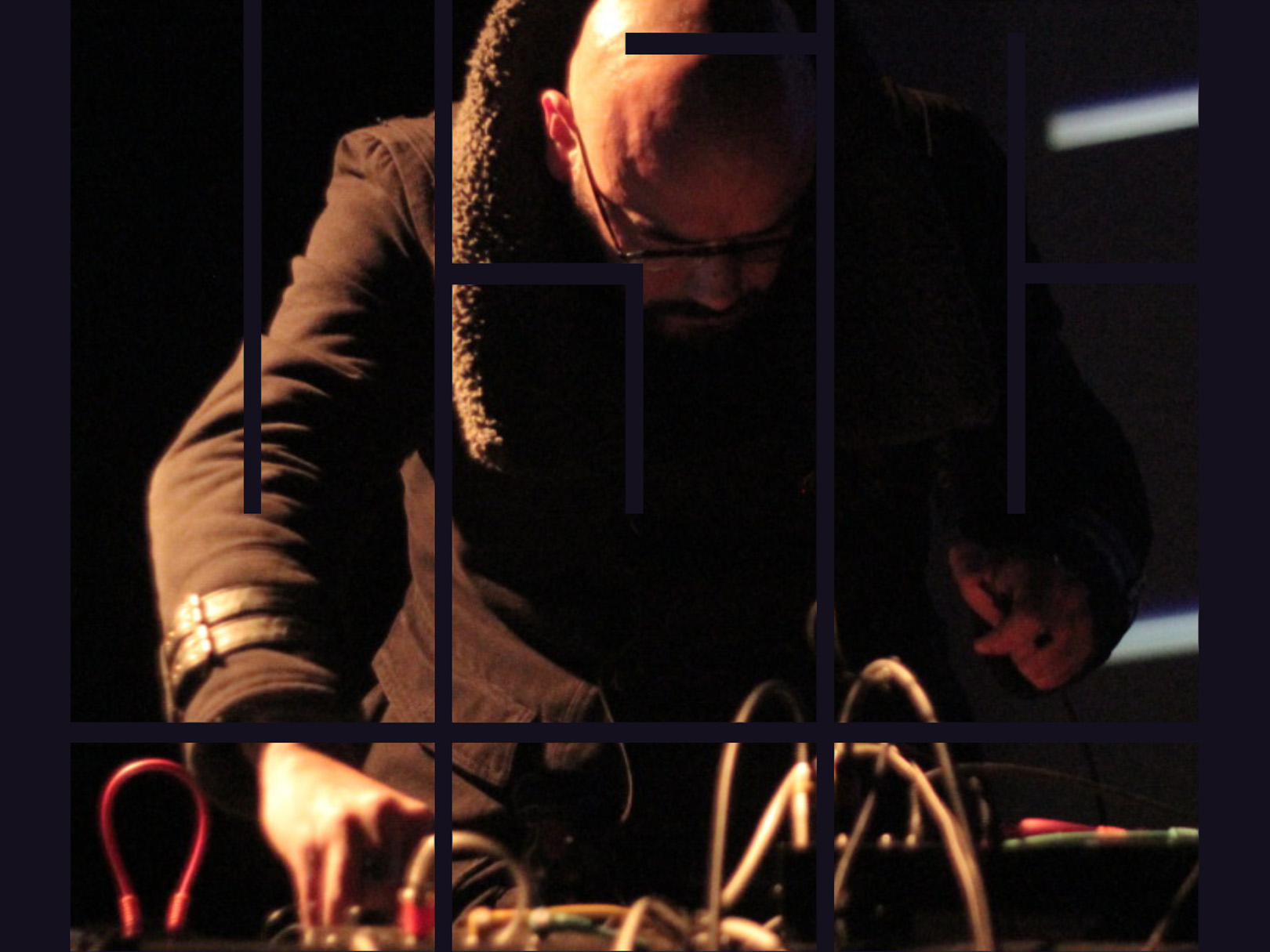
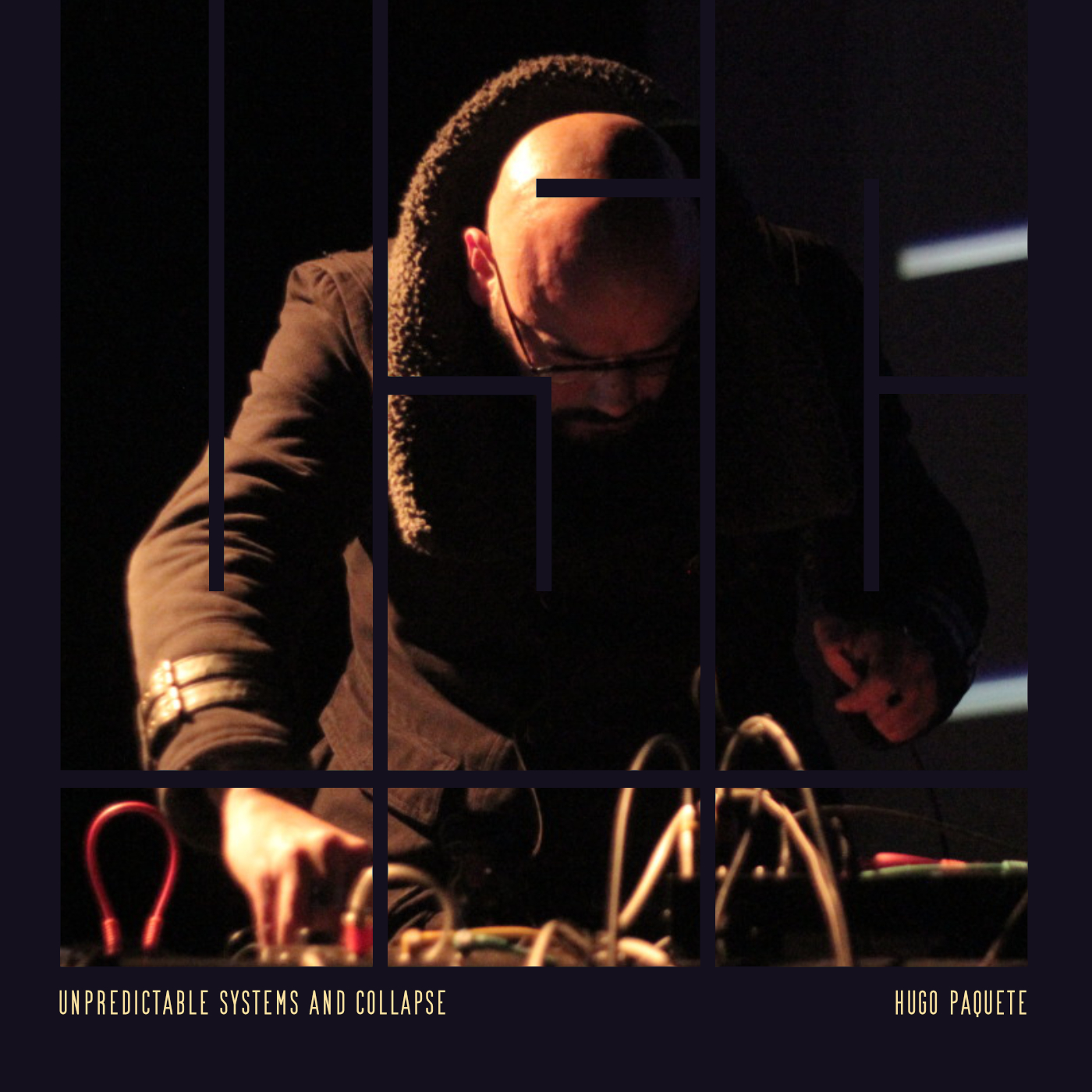
Another work now made publicly available is “Unpredictable Systems and Collapse,” a meta-media system for performance premiered at the PNEM Sound Art Festival (Netherlands, 2013). This creation operates as a dysphonic hyper-instrument, transforming the computer’s working environment into a landscape of audiovisual entropy. Built with custom software, modular audio patches, and real-time graphics, the work explores themes such as systemic fragility, non-human agency, and the aesthetic potential of digital failure.
The album captures the immersive and unpredictable nature of the system, in which sound emerges as an audible trace of glitches, errors, and system states. It constitutes an early investigation into the sonic unveiling of the technological unconscious — a theme that continues to guide the artist’s current work. It also reflects his ongoing commitment to exploring the boundaries of sound art, generative systems, and interactive media.
Listen and explore the album here:
https://paquete.bandcamp.com/album/unpredictable-systems-and-collapse
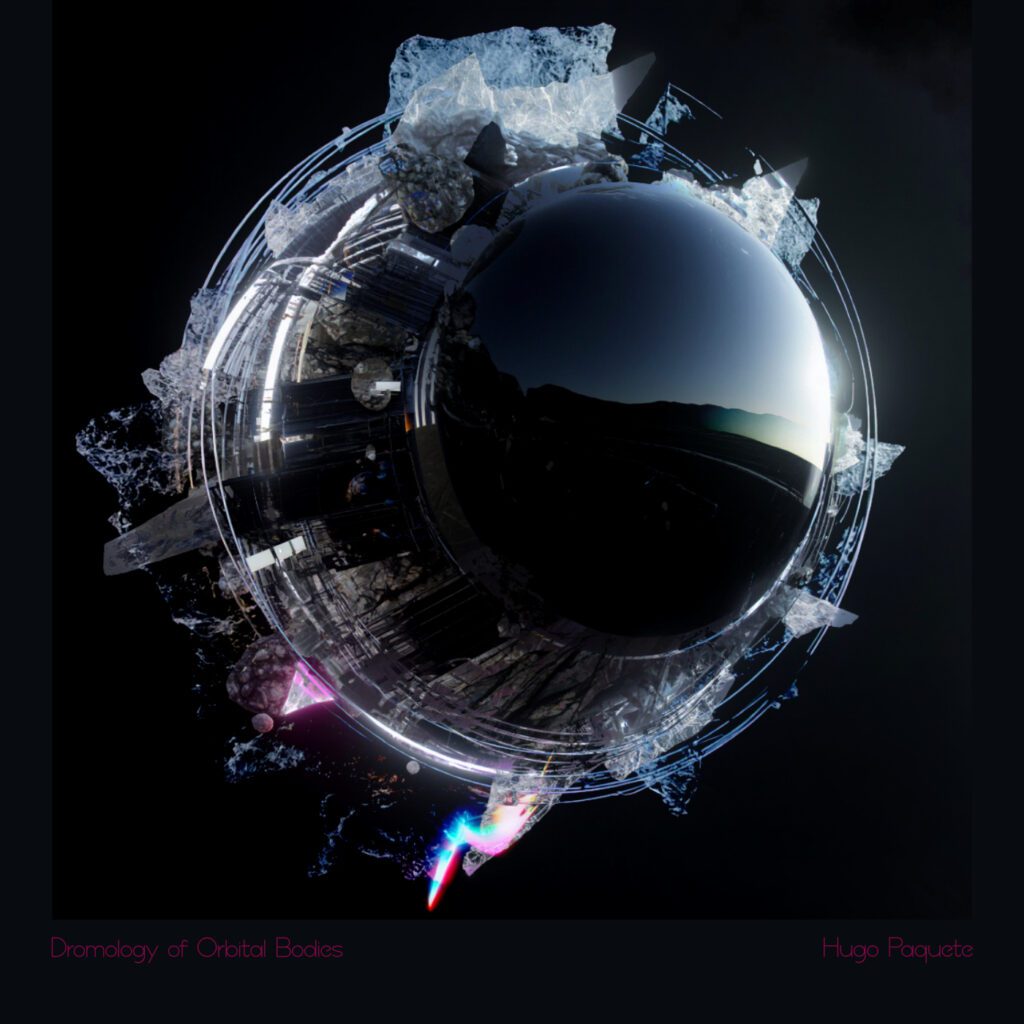
“Dromology of Orbital Bodies,” the third work released, is a diptych of multichannel acousmatic compositions for 48 channels, developed during Hugo Paquete’s artistic research residency at ZKM | Hertz-Lab between 2018 and 2019. This work sonifies real-time kinematic data from military and commercial satellites, translating orbital mechanics into immersive soundscapes that interrogate the politics of cosmic space and what Paul Virilio called dromology — the study of speed and its political consequences.
The album brings together two complementary pieces, Apoapsis and Periapsis, which trace the elliptical arcs of satellites between their farthest points and their closest gravitational approaches. Through custom hardware and software, the work renders audible the hidden architectures of power and control inscribed in orbital infrastructure, combining granular synthesis, rhythmic violence, and expansive harmonic fields to evoke the physical and symbolic dimensions of surveillance and speed. In doing so, it reflects an interdisciplinary investigation that integrates sound, data, spatial design, and critical media studies.
Listen and explore the album here:
https://paquete.bandcamp.com/album/dromology-of-orbital-bodies
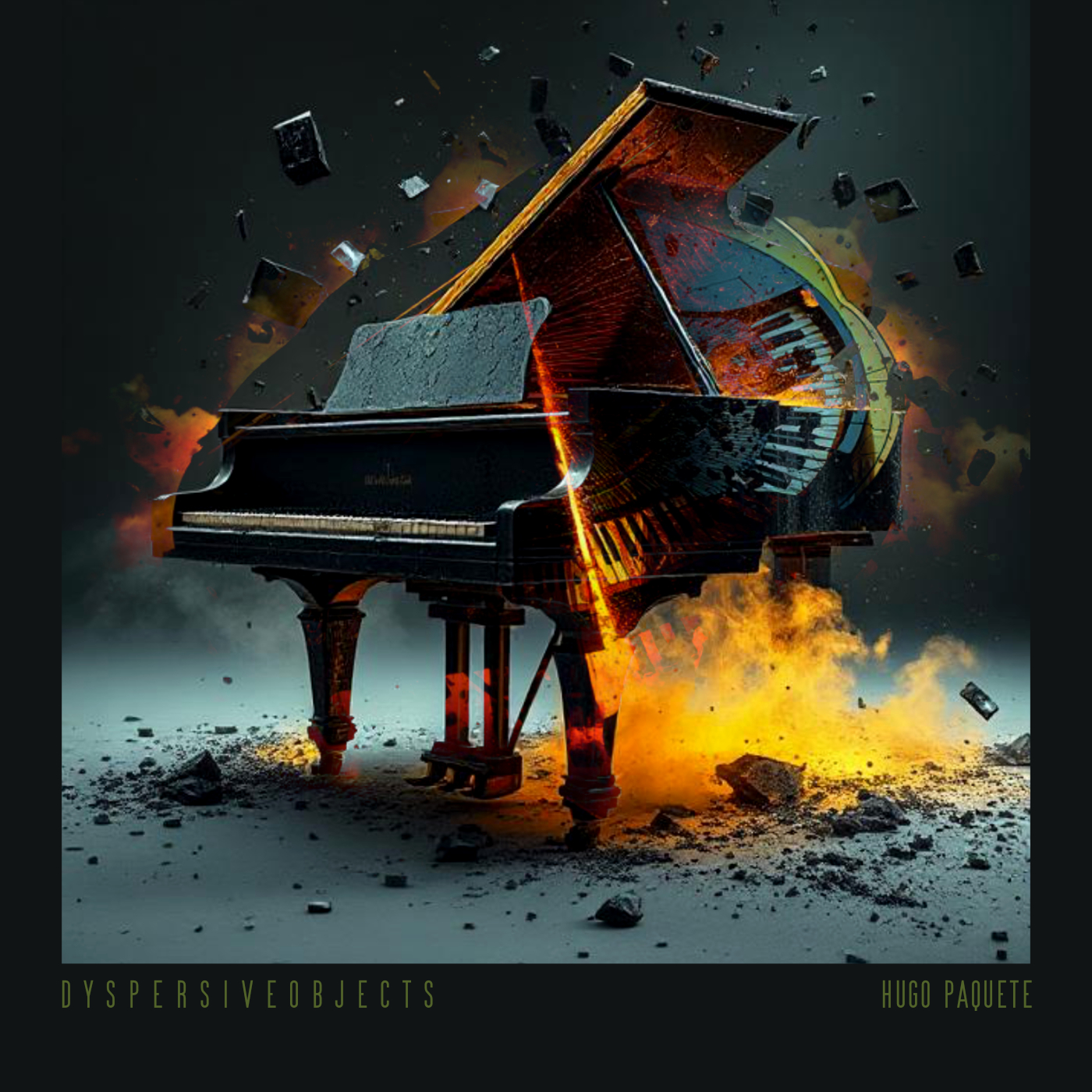
The final work released is “Dyspersive Objects,” a diptych of acousmatic compositions developed during the artist’s residency at the ZKM | Institute for Music and Acoustics in Karlsruhe in 2011. The album brings together two pieces that explore the spatial behaviour of sound through ZKM’s 48-channel system and the proprietary software Zirkonium.
The release includes:
- “Striping Strings and Broken Objects” – A micro-sonic study of prepared piano materials subjected to granular decomposition and spatial dispersion, evoking themes of entropy and material degradation.
- “Dyspersive Velocity of the Masses” – A macro-sonic exploration of synthetic sound masses involved in swarm-like phenomena and feedback-induced dispersion, translating principles of systems theory into immersive auditory landscapes.
These works reveal a dual focus on sonic materiality and emergent behaviours, using ZKM’s unique technological resources to investigate spatial acoustics as both a compositional and conceptual territory. The stereo version now available seeks to preserve the structural and aesthetic complexity of pieces originally conceived for multichannel diffusion.
The release may be of particular interest to researchers and professionals working with spatial audio, electroacoustic composition, sound studies, and media art historiography.
The album is available for listening and download via Bandcamp:
https://paquete.bandcamp.com/album/dyspersive-objects
The initiative to make these works publicly available is part of the author’s broader effort to provide access to earlier — yet conceptually enduring — pieces for researchers, artists, and the general public.
Esta publicação também está disponível em: Portuguese (Portugal)